Jak przechowywać peptydy: przewodnik po liofilizatach i roztworach
Właściwe przechowywanie peptydów to fundament każdego powtarzalnego eksperymentu. Nawet najczystszy peptyd (≥98% HPLC) traci aktywność,…

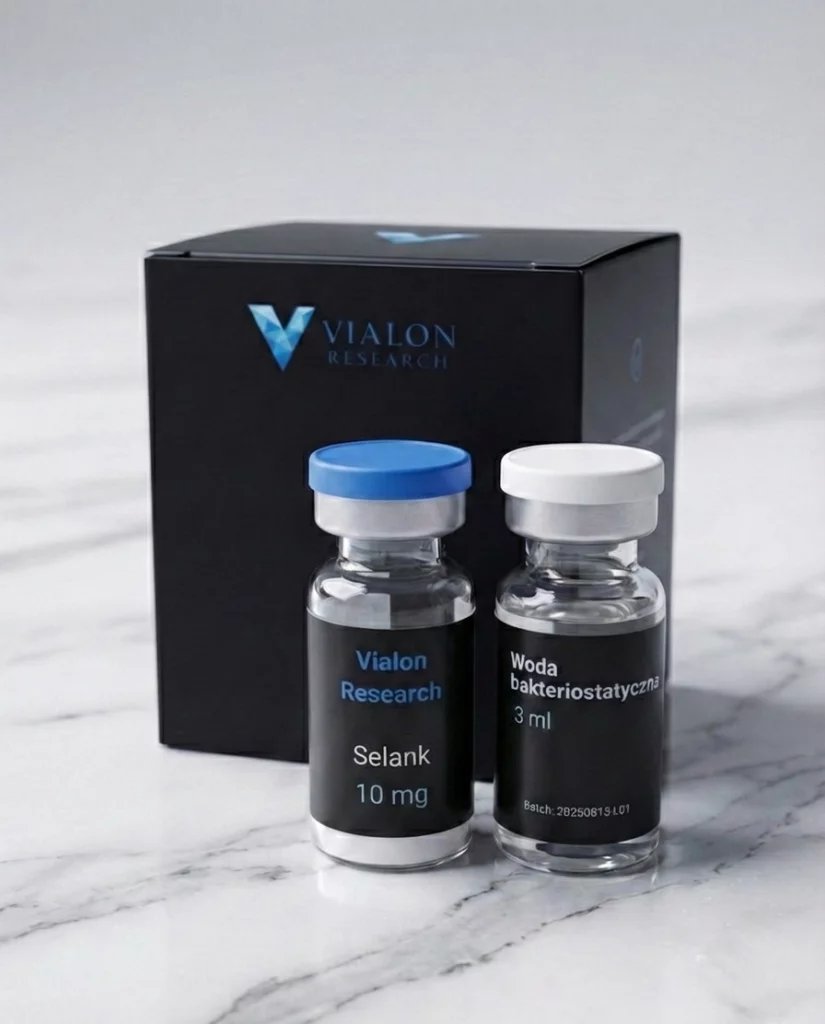
Heptapeptyd · analog taftcyny · CAS 129954-34-3
| Parametr | Wartość |
|---|---|
| Wzór cząsteczkowy | C₃₃H₅₇N₁₁O₉ |
| Masa cząsteczkowa | ~751,9 Da |
| Liczba aminokwasów | 7 (heptapeptyd) |
| Numer CAS | 129954-34-3 |
| PubChem CID | 11765600 |
| Forma fizyczna | Biały liofilizowany proszek |
| Czystość | ≥98% (RP-HPLC) |
| Klasyfikacja | Odczynnik chemiczny / materiał badawczy |
| Przeznaczenie | Wyłącznie do badań in vitro, nie do stosowania u ludzi i zwierząt |
Zgodnie z klasyfikacją CLP produkt nie jest klasyfikowany jako substancja niebezpieczna. Oferowany jako odczynnik chemiczny do zastosowań laboratoryjnych in vitro, w ramach obowiązujących w Unii Europejskiej przepisów dotyczących substancji chemicznych (REACH, CLP).
Warunki rozpuszczania i przechowywania:
Typowy sprzęt analityczny:
Wszystkie parametry robocze należy dobierać zgodnie z wewnętrznym protokołem laboratorium badawczego. Produkt przeznaczony wyłącznie do zastosowań in vitro i analitycznych; nie do stosowania u ludzi ani zwierząt.
Tuftsyna (Thr-Lys-Pro-Arg) to naturalny tetrapeptyd wyizolowany z łańcucha ciężkiego immunoglobuliny G (pozycje 289-292), po raz pierwszy opisany przez Victora Najjara w latach 70. XX wieku. Peptyd ten wzbudził zainteresowanie badaczy ze względu na właściwości immunomodulacyjne obserwowane w modelach in vitro.
Selank stanowi rozszerzenie sekwencji tuftsyny o tripeptyd Pro-Gly-Pro (PGP), który pełni funkcję stabilizatora proteolitycznego. Ta modyfikacja C-terminalna, opracowana w Instytucie Genetyki Molekularnej Rosyjskiej Akademii Nauk (ten sam zespół, który stworzył Semax), chroni peptyd przed degradacją przez amino- i karboksypeptydazy, wydłużając okres aktywności cząsteczki w warunkach badawczych.
Badania na modelach zwierzęcych wskazują, że Selank oddziałuje na układ GABAergiczny poprzez allosteryczną modulację receptora GABA-A. W eksperymentach na szczurach obserwowano wpływ peptydu na równowagę neuroprzekaźnikową w strukturach limbicznych mózgu, co stanowi istotne odróżnienie od mechanizmu działania Semax, który oddziałuje głównie przez receptory melanokortynowe.
Równolegle opisywano hamowanie aktywności enkefalinaż, enzymów odpowiedzialnych za degradację endogennych peptydów opioidowych. Mechanizm ten sugeruje pośredni wpływ Selank na endogenny system opioidowy, choć dokładna natura tych interakcji wymaga dalszych badań.
W modelach gryzoni wykazano również modulację ekspresji interleukiny 6 (IL-6) oraz czynnika neurotroficznego pochodzenia mózgowego (BDNF) w wybranych strukturach ośrodkowego układu nerwowego. Te obserwacje wskazują na wielokierunkowy profil oddziaływań Selank, obejmujący zarówno szlaki neuroprzekaźnikowe, jak i neuroimmunologiczne.
Tuftsyna została opisana przez Victora Najjara i Kenji Nishiokę w Nature (1970, 228:672-673) [1]. Autorzy wyizolowali tetrapeptyd Thr-Lys-Pro-Arg z fragmentu Fc immunoglobuliny G i wykazali jego zdolność do stymulacji fagocytozy w hodowlach leukocytów.
Seredenin S.B., Kozlovskaya M.M. i współpracownicy przeprowadzili serię badań behawioralnych z wykorzystaniem Selank w modelach gryzoni [2]. W testach podniesionego labiryntu krzyżowego (elevated plus maze) oraz otwartego pola (open field test) obserwowano zmiany we wzorcach zachowań eksploracyjnych szczurów po podaniu peptydu.
Badania elektrofizjologiczne i farmakologiczne wykazały, że Selank moduluje aktywność receptora GABA-A w tkance mózgowej gryzoni [3]. Proponowany mechanizm obejmuje allosteryczne oddziaływanie na kompleks receptorowy. Równolegle opisano hamowanie aktywności enkefalinaż, co sugeruje pośredni wpływ na obrót endogennych peptydów opioidowych.
W badaniach molekularnych na szczurach wykazano, że Selank wpływa na ekspresję BDNF oraz interleukiny 6 (IL-6) w hipokampie i korze mózgowej, wskazując na wielopoziomowy profil aktywności biologicznej w modelach przedklinicznych.
Selank to heptapeptyd o masie ~752 Da, składający się z dwóch funkcjonalnych domen:
Wybrane publikacje dotyczące peptydu Selank (analog tuftsyny z PGP).
"Tuftsin: a natural phagocytosis stimulating peptide"
Nature, 228:672-673
"Anxiolytic-like effects of Selank in elevated plus maze and open field tests in rats"
Institute of Molecular Genetics, Russian Academy of Sciences
"Tuftsin analog Selank and GABA receptor modulation"
Doklady Biological Sciences
Produkt jest surowcem chemicznym przeznaczonym wyłącznie do zastosowań badawczych, naukowych i analitycznych in vitro. Nie jest przeznaczony do użytku ludzkiego ani weterynaryjnego, w tym w celach diagnostycznych, terapeutycznych, profilaktycznych lub żywieniowych.
Produkt nie jest sklasyfikowany jako substancja niebezpieczna zgodnie z rozporządzeniem CLP (WE) nr 1272/2008. Oferowany jest jako odczynnik chemiczny w ramach obowiązujących w Unii Europejskiej przepisów dotyczących substancji chemicznych (REACH, CLP). Nie stanowi produktu leczniczego, suplementu diety, wyrobu medycznego ani kosmetyku w rozumieniu obowiązujących przepisów prawa.
Substancję niewykorzystaną należy utylizować zgodnie z lokalnymi przepisami dotyczącymi odpadów chemicznych. W warunkach laboratoryjnych: neutralizować i utylizować wraz z odpadami laboratoryjnymi. Nie wylewać do kanalizacji.
Produkt oferowany jest zgodnie z obowiązującymi przepisami Unii Europejskiej dotyczącymi substancji chemicznych (REACH, CLP) oraz prawem polskim w zakresie obrotu odczynnikami chemicznymi i materiałami badawczymi. Pełne warunki sprzedaży oraz klasyfikacja produktu zawarte są w Regulaminie Sklepu.
Dokonując zakupu, Klient potwierdza zapoznanie się z powyższymi informacjami oraz akceptuje postanowienia Regulaminu.
W przypadku pytań dotyczących obchodzenia się z produktem lub informacji regulacyjnych: [email protected].
Opinie zweryfikowanych klientów tego produktu
Ok, kontakt ze sklepem bardzo sprawny
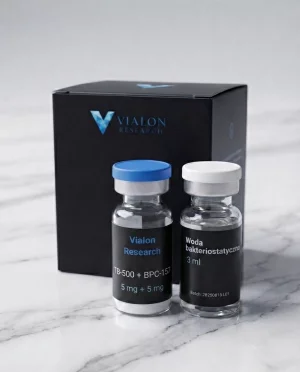
Zestaw dwóch peptydów badawczych
Właściwe przechowywanie peptydów to fundament każdego powtarzalnego eksperymentu. Nawet najczystszy peptyd (≥98% HPLC) traci aktywność,…
Czytanie COA wymaga weryfikacji partii, metod analitycznych, kryteriów akceptacji oraz wyników badań.
HPLC/MS to metody analityczne stosowane do rozdziału i analizy związków chemicznych.
Selank (TP-7) to syntetyczny heptapeptyd będący analogiem ludzkiej tuftsyny — naturalnie występującego tetrapeptydu immunomodulującego, pochodzącego z łańcucha ciężkiego immunoglobuliny G (IgG). Struktura łączy sekwencję tuftsyny (Thr-Lys-Pro-Arg) z C-terminalnym tripeptydem Pro-Gly-Pro (PGP) zwiększającym stabilność metaboliczną.
Tuftsyna to endogenny tetrapeptyd (Thr-Lys-Pro-Arg) uwalniany z łańcucha ciężkiego immunoglobuliny G przez enzymy śledzionowe. Została opisana jako naturalny immunomodulator. Selank rozszerza tę sekwencję o tripeptyd PGP chroniący przed degradacją przez aminopeptydazy.
Oba są heptapeptydami ze stabilizatorem PGP (Pro-Gly-Pro), ale pochodzą od różnych peptydów macierzystych. Selank = tuftsyna (fragment IgG) + PGP, Semax = ACTH(4-7) (fragment hormonu adrenokortykotropowego) + PGP. Mają odmienne profile aktywności w badaniach przedklinicznych.
Liofilizat przechowuj w temperaturze -20°C do -80°C. Po rekonstytucji w jałowej wodzie przechowuj w lodówce (2-8°C) i zużyć w ciągu 30 dni. Selank jest rozpuszczalny w wodzie i DMSO.
Selank został opracowany w Instytucie Genetyki Molekularnej Rosyjskiej Akademii Nauk. Kluczowe publikacje: Seredenin & Kozlovskaya opisujące interakcje z systemem GABA-ergicznym i serotoninergicznym w modelach zwierzęcych.