Variability of HPLC and MS Laboratory Analysis Results
TL;DR: Laboratory analysis results can differ even for the same test material, because methods such…

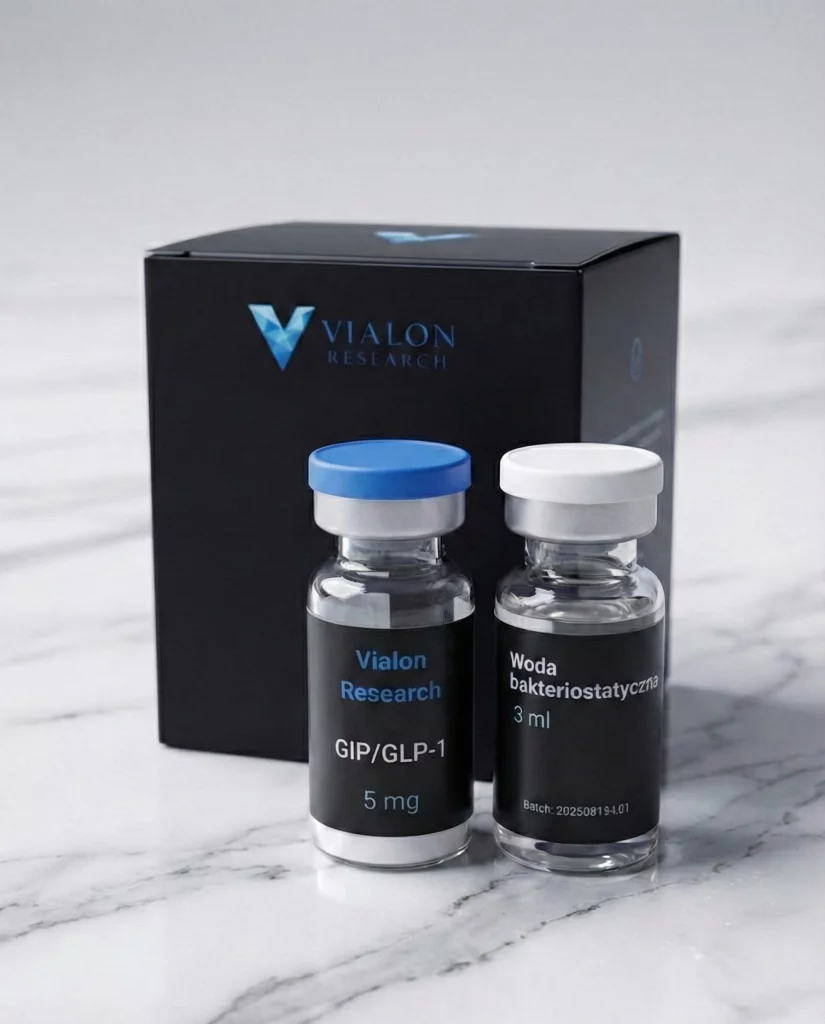
GIP/GLP-1 dual receptor agonist · 39 amino acids · CAS 2023788-19-2
| Parameter | Value |
|---|---|
| Molecular formula | C₂₂₅H₃₄₈N₄₈O₆₈ |
| Molecular weight | ~4813 Da |
| Amino acid count | 39 |
| CAS number | 2023788-19-2 |
| PubChem CID | 156588324 |
| Isoelectric point (pI) | 5.0–5.5 |
| Physical form | White lyophilized powder |
| Purity | >98% (RP-HPLC) |
| Classification | Chemical reagent / research material |
| Intended use | For in vitro research use only, not for use in humans or animals |
Not classified as a hazardous substance under CLP regulation. Offered as a chemical reagent for in vitro laboratory use, within the framework of applicable European Union chemical substances regulations (REACH, CLP).
Reconstitution and storage conditions:
Typical analytical equipment:
All working parameters should be selected according to the research laboratory’s internal protocol. Product intended exclusively for in vitro and analytical use; not for human or animal use.
Tirzepic GLP-1 + GIP is a synthetic 39-amino acid peptide designed as a dual agonist of GLP-1R and GIPR. The base sequence derives from native GIP(1-42) with modifications enabling cross-activation of the GLP-1 receptor. Key amino acid substitutions include position 2 (Aib instead of Ala, conferring resistance to DPP-4 cleavage), while a C20 diacyl fatty acid conjugated to Lys20 via a glutamic acid linker enables plasma albumin binding.
In radioligand binding studies (in vitro), Tirzepic demonstrates agonist activity at both incretin receptors: nanomolar affinity for GIPR (comparable to native GIP) and sub-nanomolar affinity for GLP-1R. This dual binding profile is unique among synthetic peptide analogs and results from a sequence design that preserves structural motifs recognized by both the GIPR and GLP-1R extracellular domains (ECD). The peptide has a molecular weight of approximately 4813 Da and an isoelectric point in the range of 5.0 to 5.5.
Both target receptors of Tirzepic, GLP-1R and GIPR, belong to the class B1 G protein-coupled receptor (GPCR) family and share a common Gs/cAMP effector pathway. Upon agonist binding to either receptor, adenylyl cyclase is activated, increasing intracellular cAMP levels and triggering PKA and Epac2 activation. However, despite an identical effector mechanism, the tissue expression profiles of the two receptors differ substantially.
GIPR is highly expressed in pancreatic beta cells, bone tissue, adipocytes, and the central nervous system. GLP-1R, on the other hand, is expressed in pancreatic beta cells but also in the heart, kidneys, lungs, and multiple brain structures (nucleus tractus solitarius, area postrema, hypothalamus). This complementary tissue distribution means that a dual agonist activates the cAMP pathway in a broader spectrum of cells compared to a monoagonist selective for a single receptor.
In in vitro experiments on isolated pancreatic beta cells (INS-1E cell line), simultaneous stimulation of GLP-1R and GIPR was shown to produce additive and, under certain conditions, synergistic increases in intracellular cAMP compared to single-receptor activation. The mechanism behind this synergy is not fully elucidated but may result from differences in desensitization kinetics: GIPR undergoes slower beta-arrestin-mediated internalization than GLP-1R, leading to prolonged Gs signaling from one of the two activated receptors.
Campbell JE and Drucker DJ (2013) [1] published a comprehensive review characterizing the pharmacology, physiology, and mechanisms of action of incretin hormones. The authors described in detail the structure of GLP-1R and GIPR as class B1 GPCRs, their tissue distribution, and the signaling pathways activated upon ligand binding (Gs/cAMP/PKA, Epac2, beta-arrestin). The paper discusses the proteolytic degradation kinetics of incretins by DPP-4 and chemical strategies used to design enzyme-resistant analogs.
Seino Y, Fukushima M, and Yabe D (2010) [2] presented a comparative analysis of GIP and GLP-1 biology, focusing on differences in receptor tissue expression and consequences for cellular signaling. The study demonstrated that GIPR predominates in bone tissue and adipocytes, while GLP-1R shows broader distribution including the heart, kidneys, and CNS structures.
Ehses JA et al. (2002) [3] investigated the mechanism of cAMP/PKA cascade activation following GIPR stimulation in isolated pancreatic beta cells (INS-1 cell line). Using FRET probes, the authors demonstrated real-time kinetics of cAMP concentration increase after native GIP administration.
Yaqub T et al. (2010) [4] performed site-directed mutagenesis analysis of the GIPR ECD domain, identifying amino acid residues critical for recognition of the N-terminus of native GIP peptide. These data have direct implications for understanding how a single peptide sequence (as in dual agonists) can simultaneously activate both incretin receptors.
Pharmacological profile comparison of the dual agonist Tirzepic with the monoagonist Sematic GLP-1 and the triple agonist Retatric Triple G:
| Parameter | Sematic GLP-1 | Tirzepic GLP-1 + GIP | Retatric Triple G |
|---|---|---|---|
| Target receptors | GLP-1R | GLP-1R + GIPR | GLP-1R + GIPR + GCGR |
| Agonism type | Monoagonist | Dual agonist | Triple agonist |
| Receptor distribution | Pancreas, heart, CNS, kidneys | Pancreas, bone, CNS, adipocytes + GLP-1R tissues | As dual + hepatocytes (GCGR) |
| cAMP pathways | Single receptor | Two receptors (additive) | Three receptors |
| Base sequence | GLP-1(7-37) | Native GIP | Native GIP (modified) |
| Molecular weight | ~4113 Da | ~4813 Da | ~4731 Da |
| Lipid modification | C18 | C20 | C20 |
The dual profile of Tirzepic enables cAMP activation in tissues with low GLP-1R expression but high GIPR expression (e.g., bone tissue). At the same time, compared to the triple agonist Retatric Triple G, the absence of GCGR activation means no direct cAMP stimulation in hepatocytes, where GCGR shows predominant expression.
Tirzepic is supplied as a lyophilized powder with purity above 98% (RP-HPLC). In dry form, store the peptide at -20°C to -80°C (stability at least 24 months). After reconstitution in sterile water, store the solution at 2-8°C and use within 30 days. The C20 diacyl fatty acid acylation provides additional hydrophobic stabilization in aqueous solution. Avoid repeated freeze-thaw cycles.
A detailed description of GLP-1 and GIP peptide signaling mechanisms, their pharmacokinetics, and the role of DPP-4 enzyme in incretin degradation is available in our knowledge base article GLP-1 and GIP: Incretin Signaling Mechanisms.
Selected publications on the pharmacology of GLP-1R and GIPR incretin receptors.
"Pharmacology, physiology, and mechanisms of incretin hormone action"
Cell Metabolism, 17(6):819-837
"GIP and GLP-1, the two incretin hormones: Similarities and differences"
Journal of Diabetes Investigation, 1(1-2):8-23
"Glucose-dependent insulinotropic polypeptide activates the Raf-Mek1/2-ERK1/2 module via a cyclic AMP/cAMP-dependent protein kinase/Rap1-mediated pathway"
Journal of Biological Chemistry, 277(40):37088-37097
"Identification of determinants of glucose-dependent insulinotropic polypeptide receptor that interact with N-terminal biologically active region of the natural ligand"
Molecular Pharmacology, 77(4):547-558
This product is a chemical raw material intended exclusively for in vitro research, scientific, and analytical applications. It is not intended for human or veterinary use, including for diagnostic, therapeutic, prophylactic, or nutritional purposes.
This product is not classified as a hazardous substance under CLP Regulation (EC) No 1272/2008. It is offered as a chemical reagent within the framework of applicable European Union chemical substances regulations (REACH, CLP). It does not constitute a medicinal product, dietary supplement, medical device, or cosmetic within the meaning of applicable laws.
Unused material should be disposed of in accordance with local regulations on chemical waste. Under laboratory conditions: neutralize and dispose with laboratory waste streams. Do not discharge into sewage systems.
This product is offered in accordance with applicable European Union regulations on chemical substances (REACH, CLP) and Polish law governing the trade of chemical reagents and research materials. Full terms of sale and product classification are set out in the Terms of Service.
By placing an order, the Customer confirms having read the above information and accepts the provisions of the Terms.
For questions regarding handling or regulatory information: [email protected].
Verified customer reviews for this product
Dobry produkt, cena mogłaby być niższa
Drugi raz zamawiam i znowu bez zastrzeżeń, produkt ok. Na pewno jeszcze wrócę jak będę potrzebował
Produkt ok, przyszedł szybko
Pierwszy raz kupowałam w tym sklepie i jestem pozytywnie zaskoczona. Wszystko przebiegło sprawnie, kontakt mailowy super, przesyłka doszła bez problemów
Działa jak powinno
TL;DR: Laboratory analysis results can differ even for the same test material, because methods such…
TL;DRThis article explains how HPLC/MS is widely used as a set of laboratory analytical methods…
Reading a COA requires verifying the batch, analytical methods, acceptance criteria, and test results.
Tirzepic is a synthetic 39-amino acid research reagent with dual affinity for GIP and GLP-1 receptors. Its structure is based on native human GIP with a C20 fatty acid modification that extends the molecular half-life under experimental conditions.
GLP-1 monoagonists activate only the GLP-1R receptor, modulating cAMP signaling cascades and neuropeptide pathways. A GIP/GLP-1 dual agonist like Tirzepic simultaneously activates both GLP-1R and GIPR, which in preclinical models demonstrates additional activation of GIPR-dependent pathways.
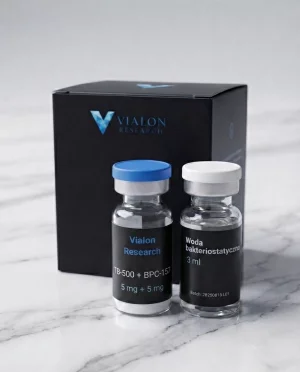
Tirzepic GLP-1+GIP is available in 5 mg, 10 mg, and 15 mg variants of lyophilized powder with ≥98% purity (RP-HPLC). The product is supplied in a hermetically sealed glass vial containing the peptide.
Store the lyophilized peptide at -20°C to -80°C. After reconstitution in sterile water, the solution is stable at 2-8°C for up to 30 days. Avoid repeated freeze-thaw cycles.
Yes. In Poland, peptides are available as chemical reagents for scientific and research purposes. They are not approved as pharmaceutical products or dietary supplements. All our peptides ship from a temperature-controlled warehouse in Poland with next-day delivery.