Variability of HPLC and MS Laboratory Analysis Results
TL;DR: Laboratory analysis results can differ even for the same test material, because methods such…

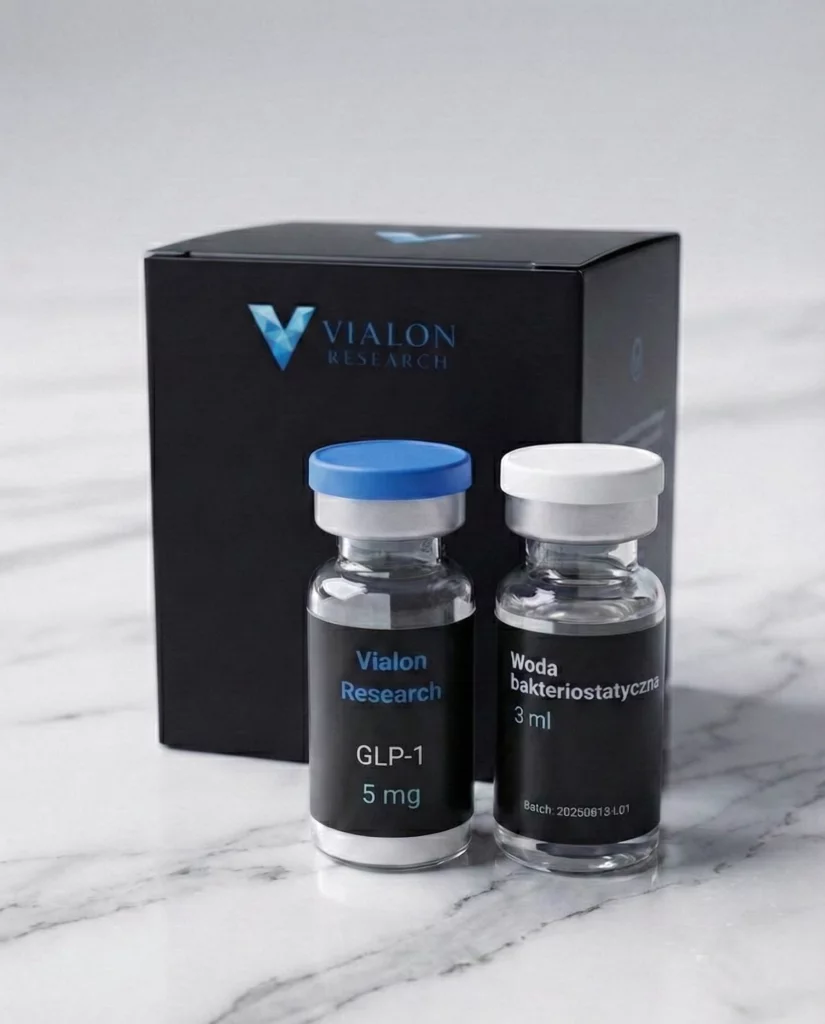
GLP-1 receptor monoagonist · 31 amino acids · CAS 910463-68-2
| Parameter | Value |
|---|---|
| Molecular formula | C₁₈₇H₂₉₁N₄₅O₅₉ |
| Molecular weight | ~4113 Da |
| Amino acid count | 31 |
| CAS number | 910463-68-2 |
| PubChem CID | 56843331 |
| Isoelectric point (pI) | 4.5–5.0 |
| Physical form | White lyophilized powder |
| Purity | >98% (RP-HPLC) |
| Classification | Chemical reagent / research material |
| Intended use | For in vitro research use only, not for use in humans or animals |
Not classified as a hazardous substance under CLP regulation. Offered as a chemical reagent for in vitro laboratory use, within the framework of applicable European Union chemical substances regulations (REACH, CLP).
Reconstitution and storage conditions:
Typical analytical equipment:
All working parameters should be selected according to the research laboratory’s internal protocol. Product intended exclusively for in vitro and analytical use; not for human or animal use.
Sematic GLP-1 is a synthetic incretin peptide analog with a 31-amino acid sequence, designed as a selective monoagonist of the GLP-1R receptor. The structure is based on the native GLP-1(7-37) peptide sequence with key modifications: amino acid substitutions at positions 8 (Ala to Aib) and 34 (Lys to Arg), plus C18 fatty acid acylation at position Lys26 via a glutamic acid linker. The Aib substitution at position 8 stereoelectronically stabilizes the helical conformation of the N-terminus while eliminating the DPP-4 proteolytic cleavage site. The C18 acyl chain provides non-covalent albumin binding, which in in vitro conditions translates to an extended half-life in serum protein-containing solutions.
The molecular weight of the peptide (~4113 Da) and isoelectric point in the range of 4.5 to 5.0 determine its solubility properties. In radioligand binding studies (in vitro), Sematic demonstrates nanomolar affinity for the human GLP-1R receptor with no significant activation of GIPR or GCGR, classifying it as a monoagonist with high receptor selectivity.
The GLP-1R receptor belongs to the class B1 G protein-coupled receptor (GPCR) family. It is a seven-transmembrane domain receptor whose N-terminal extracellular domain (ECD) is responsible for initial ligand recognition, while the transmembrane domains form a binding pocket for the peptide helix. Upon agonist binding, conformational changes in the receptor enable coupling with the Gs protein.
The signaling cascade proceeds as follows: activated Gs protein stimulates adenylyl cyclase (AC), leading to increased intracellular cyclic AMP (cAMP) levels. Elevated cAMP activates protein kinase A (PKA) and Epac2 (Exchange protein directly activated by cAMP). PKA phosphorylates a range of intracellular substrates, including the CREB transcription factor (cAMP Response Element Binding protein), which modulates target gene expression.
In parallel with the Gs/cAMP pathway, agonist binding induces recruitment of beta-arrestin 1 and 2, leading to internalization of the receptor-ligand complex into endosomes. In vitro studies on cell lines overexpressing GLP-1R (HEK293, CHO) have demonstrated that individual GLP-1 analogs can exhibit differential activation profiles of Gs vs. beta-arrestin pathways, a phenomenon termed "biased agonism." The ratio of activation between these two pathways has significant implications for the pharmacological profile of the compound in preclinical studies.
Drucker DJ in a seminal 2006 review [1] presented a comprehensive characterization of incretin hormone biology, with particular focus on GLP-1R receptor pharmacology. The paper describes the structure of the class B1 GPCR receptor, the mechanism of Gs protein coupling, and the cAMP/PKA/CREB signaling cascade. The author detailed the tissue distribution of GLP-1R and the role of DPP-4 enzyme in proteolytic degradation of native GLP-1 peptide.
Mayo KE et al. (2003) [2] published a detailed analysis of the molecular structure of the GLP-1R receptor, including the organization of transmembrane domains and ligand binding mechanism. Through site-directed mutagenesis studies, key amino acid residues of the ECD domain responsible for recognition of the peptide agonist helix were identified.
Wootten D et al. (2013) [3] investigated the phenomenon of biased agonism in the context of the GLP-1R receptor. Using a panel of reporter assays in CHO and HEK293 cell lines, the authors demonstrated that individual GLP-1 peptide analogs activate the Gs/cAMP and beta-arrestin pathways in different proportions. Results indicated that the biased signaling profile correlates with receptor internalization kinetics and cell surface recycling.
Jorgensen R et al. (2005) [4] conducted a series of BRET (Bioluminescence Resonance Energy Transfer) experiments on HEK293 cells overexpressing GLP-1R, demonstrating the kinetics of beta-arrestin 1 and 2 recruitment following agonist stimulation. The authors described the relationship between C-terminal receptor phosphorylation by GRK kinases and internalization efficiency in clathrin-coated pits.
Receptor profile comparison of the monoagonist Sematic with the dual agonist Tirzepic GLP-1 + GIP and the triple agonist Retatric Triple G:
| Parameter | Sematic GLP-1 | Tirzepic GLP-1 + GIP | Retatric Triple G |
|---|---|---|---|
| Target receptors | GLP-1R | GLP-1R + GIPR | GLP-1R + GIPR + GCGR |
| Agonism type | Monoagonist | Dual agonist | Triple agonist |
| Amino acid count | 31 | 39 | 39 |
| Base sequence | GLP-1(7-37) | Native GIP | Native GIP (modified) |
| Lipid modification | C18 acylation | C20 acylation | C20 acylation |
| Signaling pathway | Gs/cAMP (GLP-1R) | Gs/cAMP (GLP-1R + GIPR) | Gs/cAMP (GLP-1R + GIPR + GCGR) |
| Molecular weight | ~4113 Da | ~4813 Da | ~4731 Da |
The monoagonistic selectivity of Sematic for GLP-1R serves as a reference point in comparative incretin signaling studies. In experiments on isolated cell lines overexpressing individual receptors, multi-receptor analogs activate additional Gs/cAMP pathways in tissues where GLP-1R expression is low but GIPR or GCGR are dominant.
Sematic GLP-1 is supplied as a lyophilized powder with purity above 98% (RP-HPLC). In dry form, store the peptide at -20°C to -80°C for stability of at least 24 months. After reconstitution in sterile water, store at 2-8°C and use within 30 days. Avoid repeated freeze-thaw cycles. The C18 fatty acid acylation enhances peptide stability in solution compared to the native GLP-1 sequence, reducing susceptibility to hydrolytic degradation.
Learn more about GLP-1R receptor biology, incretin peptide pharmacokinetics, and the role of DPP-4 enzyme in our knowledge base article GLP-1 and GIP: Incretin Signaling Mechanisms.
This product is a chemical raw material intended exclusively for in vitro research, scientific, and analytical applications. It is not intended for human or veterinary use, including for diagnostic, therapeutic, prophylactic, or nutritional purposes.
This product is not classified as a hazardous substance under CLP Regulation (EC) No 1272/2008. It is offered as a chemical reagent within the framework of applicable European Union chemical substances regulations (REACH, CLP). It does not constitute a medicinal product, dietary supplement, medical device, or cosmetic within the meaning of applicable laws.
Unused material should be disposed of in accordance with local regulations on chemical waste. Under laboratory conditions: neutralize and dispose with laboratory waste streams. Do not discharge into sewage systems.
This product is offered in accordance with applicable European Union regulations on chemical substances (REACH, CLP) and Polish law governing the trade of chemical reagents and research materials. Full terms of sale and product classification are set out in the Terms of Service.
By placing an order, the Customer confirms having read the above information and accepts the provisions of the Terms.
For questions regarding handling or regulatory information: [email protected].
Verified customer reviews for this product
Wysyłka szybką ,kontakt ze sklepem świetny produkt beż zarzutu
Szybko i działa jak powinno
Git
TL;DR: Laboratory analysis results can differ even for the same test material, because methods such…
TL;DRThis article explains how HPLC/MS is widely used as a set of laboratory analytical methods…
Reading a COA requires verifying the batch, analytical methods, acceptance criteria, and test results.
Liofilizat peptydowy należy przechowywać w temperaturze -20°C do -80°C w celu zapewnienia maksymalnej stabilności. Po rekonstytucji roztwór można przechowywać w lodówce (2-8°C) przez okres do 4 tygodni. Unikaj wielokrotnego zamrażania i rozmrażania.
W Polsce peptydy są dostępne wyłącznie jako odczynniki chemiczne do celów naukowych i badawczych. Nie są dopuszczone do użytku jako produkty lecznicze ani suplementy diety, a ich status prawny nie pozwala na stosowanie ich w celach konsumenckich.
Wszystkie peptydy dostępne na naszej stronie są oferowane wyłącznie jako odczynniki chemiczne przeznaczone do celów naukowych i badawczych. Nie są dopuszczone do sprzedaży jako produkty lecznicze ani suplementy diety, nie są przeznaczone do spożycia.
Zamówienia złożone do godziny 15:00 są wysyłane tego samego dnia roboczego. Standardowa dostawa to 1-2 dni robocze. Oferujemy wysyłkę przez InPost Paczkomat oraz kuriera.