Variability of HPLC and MS Laboratory Analysis Results
TL;DR: Laboratory analysis results can differ even for the same test material, because methods such…

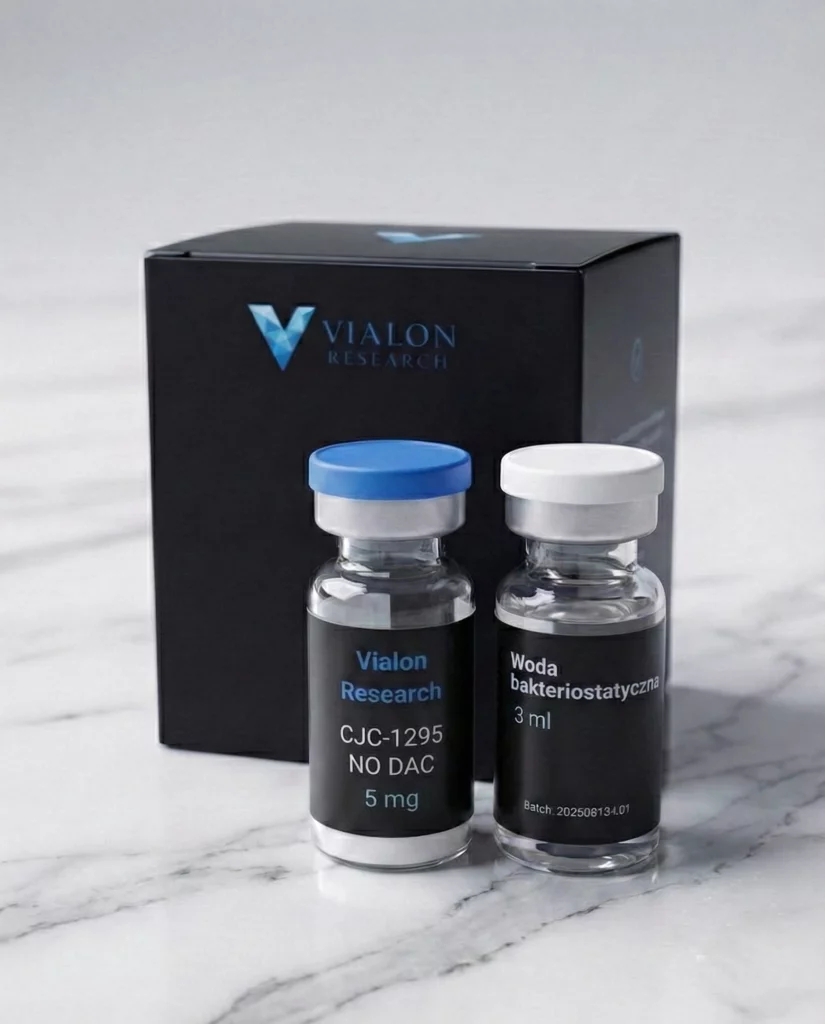
GHRH analog · 29 amino acids · CAS 863288-34-0
| Parameter | Value |
|---|---|
| Molecular formula | C₁₅₂H₂₅₂N₄₄O₄₂ |
| Molecular weight | ~3367.9 Da |
| Amino acid count | 29 |
| CAS number | 863288-34-0 |
| PubChem CID | 56841945 |
| Physical form | White lyophilized powder |
| Purity | ≥98% (RP-HPLC) |
| Classification | Chemical reagent / research material |
| Intended use | For in vitro research use only, not for use in humans or animals |
Not classified as a hazardous substance under CLP regulation. Offered as a chemical reagent for in vitro laboratory use, within the framework of applicable European Union chemical substances regulations (REACH, CLP).
Reconstitution and storage conditions:
Typical analytical equipment:
All working parameters should be selected according to the research laboratory’s internal protocol. Product intended exclusively for in vitro and analytical use; not for human or animal use.
CJC-1295 NO DAC acts as an agonist of the GHRH-R (Growth Hormone Releasing Hormone Receptor) — a Gs protein-coupled receptor located on somatotrophs of the anterior pituitary. Receptor activation initiates the cAMP/PKA cascade, leading to GH1 gene transcription and growth hormone release.
Four amino acid substitutions at positions 2, 8, 15, and 27 of the GHRH(1-29) sequence protect the peptide from degradation by dipeptidyl peptidase IV (DPP-IV) — an enzyme that physiologically inactivates native GHRH within minutes. As a result, CJC-1295 NO DAC retains biological activity significantly longer than endogenous GHRH.
Native growth hormone releasing hormone (GHRH) consists of 44 amino acids, but as early as the 1980s, it was demonstrated that full biological activity at the GHRH-R receptor is retained by a fragment comprising only the first 29 residues. This fragment, designated GRF(1-29) or sermorelin, became the starting point for designing analogs with increased metabolic stability. The name "Mod GRF 1-29" was introduced to distinguish the modified peptide from unmodified GRF(1-29), which undergoes rapid enzymatic degradation under physiological conditions.
Four key amino acid substitutions confer protease resistance to Mod GRF 1-29. At position 2, alanine was replaced with D-alanine, protecting the N-terminus from DPP-IV cleavage. At position 8, asparagine was replaced with aspartic acid, eliminating susceptibility to deamidation — a spontaneous loss of the amide group that at neutral pH leads to loss of activity. At position 15, an alanine residue modification limits further proteolysis in the middle chain segment. Finally, at position 27, methionine was replaced with leucine, preventing oxidation of the methionine thioether group to sulfoxide — one of the most common oxidative degradation pathways in peptides.
Together, these modifications extend the half-life from several minutes (native GHRH) to approximately 30 minutes, while maintaining full GHRH-R receptor affinity and cAMP/PKA cascade activation capacity in somatotrophs.
Growth hormone releasing hormone was identified in 1982 by two independent research teams nearly simultaneously. Guillemin et al. isolated a 44-amino acid peptide with GH-releasing activity from a pancreatic tumor of a individual with ectopic acromegaly, publishing in Science [1]. In parallel, Rivier, Spiess, Thorner, and Vale characterized the 40-amino acid form of the same hormone, publishing in Nature the same year [2].
After identification of native GHRH, its extremely short in vivo half-life due to DPP-IV degradation was recognized as a major limitation. This led to development of modified analogs including Mod GRF 1-29. Teichman et al. (2006) published pharmacokinetic characterization in Journal of Clinical Endocrinology and Metabolism, demonstrating sustained GH/IGF-1 axis stimulation [3].
One of the most significant discoveries in somatotropic axis research is the synergy between GHRH and growth hormone secretagogues (GHS). Bowers et al. in their landmark 1984 paper described a new synthetic hexapeptide capable of specific GH release from the pituitary [4]. Later studies confirmed that simultaneous stimulation of two independent signaling pathways — the GHRH-R/cAMP/PKA pathway (activated by GHRH analogs) and the GHS-R1a/IP3/DAG pathway (activated by ghrelin, GHRP-6, or Ipamorelin) — produces GH release several-fold greater than the sum of individual effects. This forms the scientific basis for blend products such as CJC-1295 NO DAC + Ipamorelin.
Dipeptidyl peptidase IV (DPP-IV, also known as CD26) is a membrane serine protease that cleaves two-amino acid fragments from the N-terminus of peptides having proline or alanine at position 2. Native GHRH(1-44) has alanine at position 2, making it a DPP-IV substrate with degradation to inactive GHRH(3-44) within minutes. The D-alanine substitution at position 2 in Mod GRF 1-29 effectively eliminates recognition by the DPP-IV active site due to the enzyme's strict stereoselectivity for L-amino acids.
In lyophilized form, CJC-1295 NO DAC shows high stability at -20°C, away from light and moisture. After reconstitution in sterile water, store at 2-8°C and use within 30 days. Two of the four amino acid modifications were designed specifically for chemical stability: Met27→Leu eliminates methionine sulfoxide oxidation, and Asn8→Asp prevents asparagine deamidation.
CJC-1295 NO DAC is also available as a blend with Ipamorelin — CJC-1295 NO DAC + Ipamorelin combines both peptides targeting the somatotropic axis through two independent receptor pathways.
Selected publications on GHRH analogs, Mod GRF 1-29, and growth hormone secretagogues.
"Modified GRF(1-29) after subcutaneous and intranasal administration in healthy volunteers"
British Journal of Clinical Pharmacology, 58(5):548-555
"Once-daily administration of CJC-1295, a long-acting growth hormone-releasing hormone analog, normalizes growth in growth hormone-deficient adult rats"
Journal of Pharmacology and Experimental Therapeutics, 309:984-992
This product is a chemical raw material intended exclusively for in vitro research, scientific, and analytical applications. It is not intended for human or veterinary use, including for diagnostic, therapeutic, prophylactic, or nutritional purposes.
This product is not classified as a hazardous substance under CLP Regulation (EC) No 1272/2008. It is offered as a chemical reagent within the framework of applicable European Union chemical substances regulations (REACH, CLP). It does not constitute a medicinal product, dietary supplement, medical device, or cosmetic within the meaning of applicable laws.
Unused material should be disposed of in accordance with local regulations on chemical waste. Under laboratory conditions: neutralize and dispose with laboratory waste streams. Do not discharge into sewage systems.
This product is offered in accordance with applicable European Union regulations on chemical substances (REACH, CLP) and Polish law governing the trade of chemical reagents and research materials. Full terms of sale and product classification are set out in the Terms of Service.
By placing an order, the Customer confirms having read the above information and accepts the provisions of the Terms.
For questions regarding handling or regulatory information: [email protected].
Verified customer reviews for this product
Solidnie
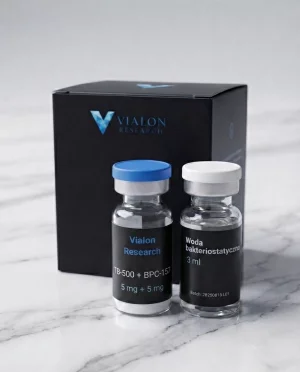
TL;DR: Laboratory analysis results can differ even for the same test material, because methods such…
TL;DRThis article explains how HPLC/MS is widely used as a set of laboratory analytical methods…
Reading a COA requires verifying the batch, analytical methods, acceptance criteria, and test results.
CJC-1295 NO DAC (also known as Modified GRF 1-29) is a synthetic 29-amino acid analog of GHRH with four amino acid substitutions that confer resistance to DPP-IV enzymatic degradation. "NO DAC" indicates it lacks the Drug Affinity Complex used in some other formulations. CAS: 863288-34-0.
The NO DAC version has a shorter half-life but produces more physiological pulsatile release patterns in research models. The DAC version includes a maleimidopropionic acid linker for albumin binding, extending its half-life but creating a more sustained release profile.
Store lyophilized CJC-1295 NO DAC at -20°C to -80°C. After reconstitution, store at 2-8°C and use within 30 days.
CJC-1295 NO DAC is available as a 5 mg lyophilized vial.
CJC-1295 NO DAC acts on the GHRH receptor while Ipamorelin acts on the GHS-R1a (ghrelin) receptor. In research, these two pathways are studied for their synergistic effects on the somatotropic axis. We offer both peptides individually and as a ready-made blend.