GHK-Cu — tripeptyd miedziowy w badaniach regeneracyjnych
Uwaga: Poniższy artykuł ma charakter wyłącznie edukacyjny i informacyjny. Opisywane substancje są przeznaczone do celów…
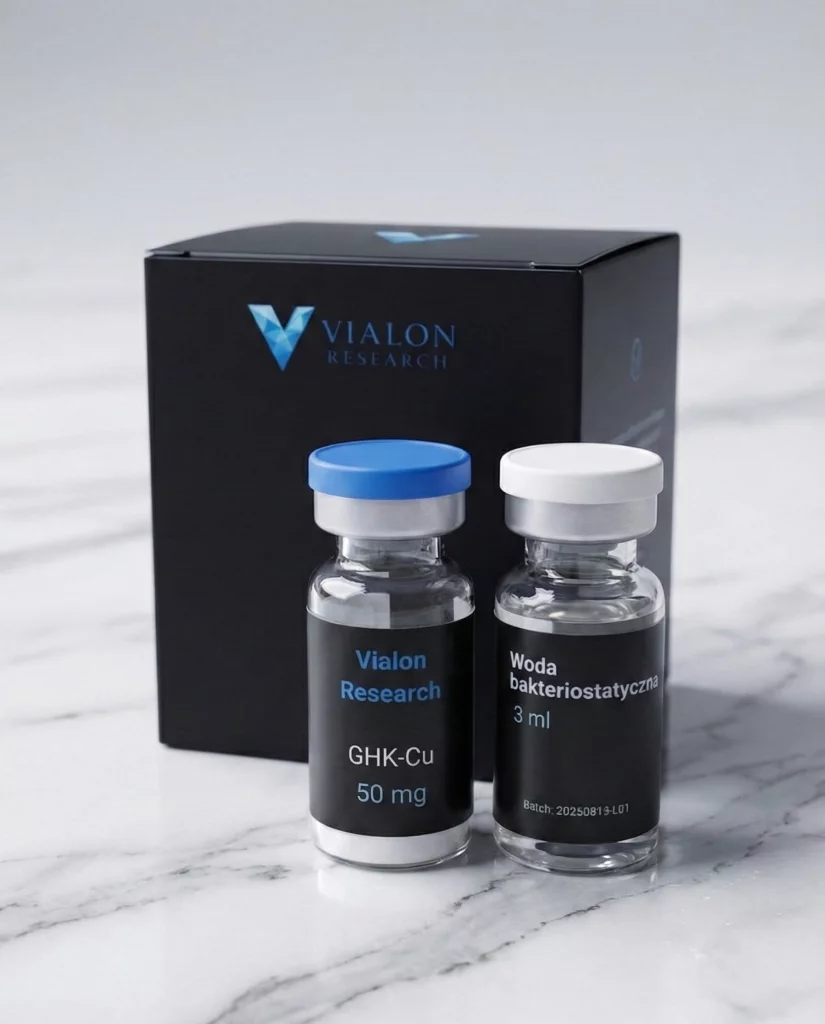
Tripeptyd miedziowy · 3 aminokwasy · CAS 89030-95-5
| Parametr | Wartość |
|---|---|
| Wzór cząsteczkowy | C₁₄H₂₃CuN₆O₄ |
| Masa cząsteczkowa | ~403,9 Da |
| Liczba aminokwasów | 3 (tripeptyd) |
| Sekwencja | Gly-His-Lys·Cu²⁺ |
| Numer CAS | 89030-95-5 |
| PubChem CID | 73587 |
| Forma fizyczna | Niebieski liofilizowany proszek |
| Czystość | ≥98% (RP-HPLC) |
| Klasyfikacja | Odczynnik chemiczny / materiał badawczy |
| Przeznaczenie | Wyłącznie do badań in vitro, nie do stosowania u ludzi i zwierząt |
Zgodnie z klasyfikacją CLP produkt nie jest klasyfikowany jako substancja niebezpieczna. Oferowany jako odczynnik chemiczny do zastosowań laboratoryjnych in vitro, w ramach obowiązujących w Unii Europejskiej przepisów dotyczących substancji chemicznych (REACH, CLP).
Warunki rozpuszczania i przechowywania:
Typowy sprzęt analityczny:
Wszystkie parametry robocze należy dobierać zgodnie z wewnętrznym protokołem laboratorium badawczego. Produkt przeznaczony wyłącznie do zastosowań in vitro i analitycznych; nie do stosowania u ludzi ani zwierząt.
GHK-Cu (Gly-His-Lys·Cu²⁺) to naturalnie występujący tripeptyd miedziowy, po raz pierwszy wyizolowany z ludzkiej albuminy osocza przez Lorena Pickarta w 1973 roku. Sekwencja trzech reszt aminokwasowych (glicyna, histydyna, lizyna) tworzy z jonem Cu²⁺ stabilny kompleks chelatowy o masie cząsteczkowej ~403,9 Da. Kluczową rolę w koordynacji miedzi pełni pierścień imidazolowy reszty histydynowej.
GHK-Cu występuje fizjologicznie w osoczu krwi, ślinie i moczu ssaków. Badania wykazały, że stężenie tego tripeptydu w osoczu ludzkim zmniejsza się wraz z wiekiem. Jest to jeden z nielicznych peptydów, w których jon metalu stanowi integralną część kompleksu biologicznie aktywnego, a nie jedynie kofaktor enzymatyczny.
Podstawową funkcją kompleksu GHK-Cu badaną w modelach in vitro jest dostarczanie jonów Cu²⁺ do komórek. Miedź pełni rolę kofaktora kluczowych enzymów: oksydazy lizylowej (sieciowanie kolagenu i elastyny), dysmutazy ponadtlenkowej (SOD) oraz oksydazy cytochromu c.
W badaniach na kulturach fibroblastów wykazano, że GHK-Cu moduluje ekspresję szeregu genów związanych z macierzą zewnątrzkomórkową. Obserwowano zwiększoną ekspresję kolagenu typu I i III, elastyny oraz glikozaminoglikanów, przy jednoczesnym obniżeniu aktywności metaloproteinaz macierzy (MMP-1, MMP-2). Stwierdzono również stymulację ekspresji dekoryny, proteoglikanu o właściwościach antyfibrotycznych, oraz modulację sygnalizacji nadrodziny TGF-β.
Badania nad profilem cytokinowym w hodowlach komórkowych wykazały, że GHK-Cu obniża poziom czynników prozapalnych, w tym TNF-α i IL-6. Te obserwacje stanowią punkt wyjścia do dalszych badań nad właściwościami immunomodulacyjnymi tego tripeptydu miedziowego.
Tripeptyd GHK został opisany przez Pickarta i Thalera w Nature New Biology (1973, 243:85-87) [1]. Autorzy wyizolowali z ludzkiej albuminy osocza czynnik peptydowy zdolny do przedłużania przeżywalności hepatocytów w hodowli komórkowej.
Pickart, Vasquez-Soltero i Margolina (2015) opublikowali w BioMed Research International (2015:648108) kompleksowy przegląd [2], wykazując że GHK reguluje ekspresję ponad 4000 genów w ludzkich fibroblastach, w tym geny kolagenu, elastyny, fibronektyny, metaloproteinaz i cytokin prozapalnych.
W eksperymentach na modelach szczurzych obserwowano przyspieszenie zamykania ran skórnych, zwiększoną syntezę kolagenu oraz intensyfikację angiogenezy w obszarze uszkodzenia po podaniu GHK-Cu [3].
W hodowlach fibroblastów GHK-Cu obniża ekspresję MMP-1 i MMP-2, jednocześnie zwiększając ekspresję dekoryny, endogennego inhibitora włóknienia, co korelowało z lepszą organizacją macierzy pozakomórkowej [2].
GHK-Cu dostarczany jest jako liofilizowany proszek o czystości powyżej 98% (RP-HPLC). Liofilizat przechowywać w temperaturze od -20°C do -80°C w szczelnie zamkniętym pojemniku, chronionym od wilgoci i światła. Po rekonstytucji w jałowej wodzie roztwór zachowuje stabilność przez okres do 30 dni w temperaturze 2-8°C. Obecność jonu miedzi(II) w kompleksie czyni peptyd wrażliwym na środowiska silnie redukujące. Unikać powtarzanych cykli zamrażania i rozmrażania. Szczegółowe zasady przechowywania peptydów liofilizowanych opisano w artykule Przechowywanie peptydów: liofilizaty i roztwory.
GHK-Cu jest jednym z najlepiej przebadanych peptydów w kontekście interakcji peptyd-metal. Jako tripeptyd o masie zaledwie ~340 Da stanowi najkrótszy peptyd w naszej ofercie. Praktyczny przewodnik po przechowywaniu liofilizatów i roztworów peptydowych jest dostępny w bazie wiedzy.
Wybrane publikacje dotyczące tripeptydu miedziowego GHK-Cu.
"Tripeptide in human serum which prolongs survival of normal liver cells and stimulates growth in neoplastic cells"
Nature New Biology, 243:85-87
"GHK Peptide as a Natural Modulator of Multiple Cellular Pathways in Skin Regeneration"
BioMed Research International, 2015:648108
"Regenerative and Protective Actions of the GHK-Cu Peptide in the Light of the New Gene Data"
International Journal of Molecular Sciences, 19(7):1987
Produkt jest surowcem chemicznym przeznaczonym wyłącznie do zastosowań badawczych, naukowych i analitycznych in vitro. Nie jest przeznaczony do użytku ludzkiego ani weterynaryjnego, w tym w celach diagnostycznych, terapeutycznych, profilaktycznych lub żywieniowych.
Produkt nie jest sklasyfikowany jako substancja niebezpieczna zgodnie z rozporządzeniem CLP (WE) nr 1272/2008. Oferowany jest jako odczynnik chemiczny w ramach obowiązujących w Unii Europejskiej przepisów dotyczących substancji chemicznych (REACH, CLP). Nie stanowi produktu leczniczego, suplementu diety, wyrobu medycznego ani kosmetyku w rozumieniu obowiązujących przepisów prawa.
Substancję niewykorzystaną należy utylizować zgodnie z lokalnymi przepisami dotyczącymi odpadów chemicznych. W warunkach laboratoryjnych: neutralizować i utylizować wraz z odpadami laboratoryjnymi. Nie wylewać do kanalizacji.
Produkt oferowany jest zgodnie z obowiązującymi przepisami Unii Europejskiej dotyczącymi substancji chemicznych (REACH, CLP) oraz prawem polskim w zakresie obrotu odczynnikami chemicznymi i materiałami badawczymi. Pełne warunki sprzedaży oraz klasyfikacja produktu zawarte są w Regulaminie Sklepu.
Dokonując zakupu, Klient potwierdza zapoznanie się z powyższymi informacjami oraz akceptuje postanowienia Regulaminu.
W przypadku pytań dotyczących obchodzenia się z produktem lub informacji regulacyjnych: [email protected].
Opinie zweryfikowanych klientów tego produktu
Legit
Kontakt ze Sprzedawcą w pełni profesjonalny. Obsługa uprzejma, rzetelna i kompetentna. Z pełnym przekonaniem polecam zarówno Sprzedawcę, jak i produkty oferowane na stronie. Współpraca przebiegła bez zarzutu.
Git
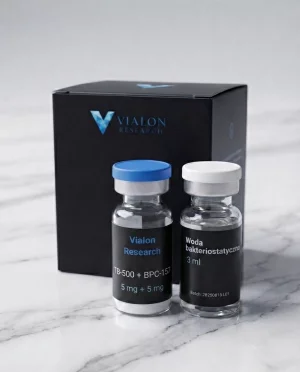
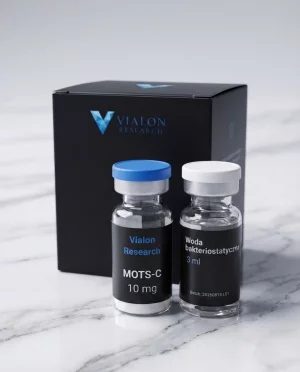
Zestaw dwóch peptydów badawczych
Uwaga: Poniższy artykuł ma charakter wyłącznie edukacyjny i informacyjny. Opisywane substancje są przeznaczone do celów…
Właściwe przechowywanie peptydów to fundament każdego powtarzalnego eksperymentu. Nawet najczystszy peptyd (≥98% HPLC) traci aktywność,…
Czytanie COA wymaga weryfikacji partii, metod analitycznych, kryteriów akceptacji oraz wyników badań.
GHK-Cu (Copper Tripeptide-1) to naturalnie występujący tripeptyd miedziowy składający się z glicyny, L-histydyny i L-lizyny, tworzący stabilny kompleks z jonem miedzi(II). Został po raz pierwszy wyizolowany z osocza w 1973 roku przez Lorena Pickarta.
Charakterystyczny niebieski kolor liofilizatu pochodzi od jonu miedzi(II) skompleksowanego z peptydem. Jest to cecha autentyczności — czysty GHK-Cu zawsze ma zabarwienie niebieskie. Bezbarwny proszek oznaczałby brak jonu miedzi w kompleksie.
Oferujemy GHK-Cu w gramaturze 50mg w formie liofilizowanego proszku. Produkt dostarczany jest w fiolce z liofilizatem kompleksu peptyd-miedź.
Liofilizat przechowuj w temperaturze -20°C do -80°C, chronić przed światłem. Po rekonstytucji w jałowej wodzie przechowuj w lodówce (2-8°C) i zużyć w ciągu 30 dni. Unikać kontaktu z silnymi reduktorami.
Kluczowe prace: Pickart (1973, odkrycie z osocza), Pickart & Margolina (zdolność wiązania z ponad 4000 sekwencjami genowymi), oraz liczne publikacje w Archives of Biochemistry and Biophysics. GHK-Cu jest jednym z najlepiej zbadanych peptydów miedziowych w literaturze naukowej.