CJC-1295 NO DAC i Ipamorelin — synergia szlaków sekrecji GH
Nota: Niniejszy artykuł ma charakter wyłącznie edukacyjny i jest oparty na recenzowanej literaturze naukowej. Opisane…

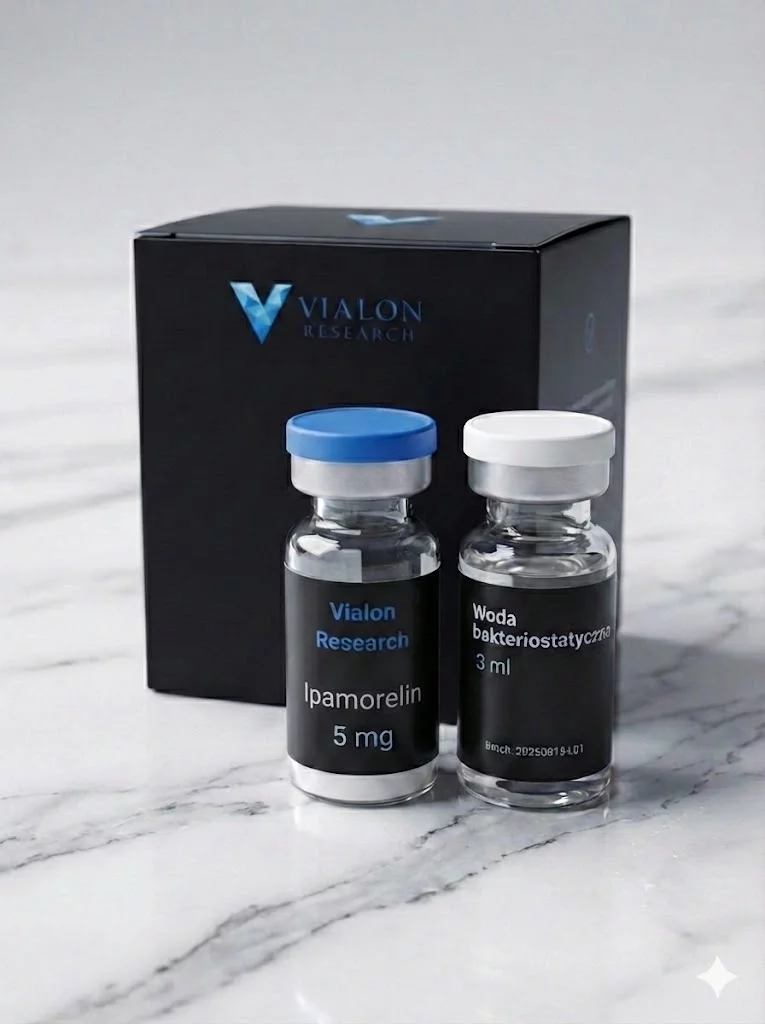
Pentapeptyd · agonista GHSR · CAS 170851-70-4
| Parametr | Wartość |
|---|---|
| Wzór cząsteczkowy | C₃₈H₄₉N₉O₅ |
| Masa cząsteczkowa | ~711,85 Da |
| Liczba aminokwasów | 5 (pentapeptyd) |
| Sekwencja | Aib-His-D-2-Nal-D-Phe-Lys-NH₂ |
| Numer CAS | 170851-70-4 |
| PubChem CID | 9831659 |
| Forma fizyczna | Biały liofilizowany proszek |
| Czystość | ≥98% (RP-HPLC) |
| Klasyfikacja | Odczynnik chemiczny / materiał badawczy |
| Przeznaczenie | Wyłącznie do badań in vitro, nie do stosowania u ludzi i zwierząt |
Zgodnie z klasyfikacją CLP produkt nie jest klasyfikowany jako substancja niebezpieczna. Oferowany jako odczynnik chemiczny do zastosowań laboratoryjnych in vitro, w ramach obowiązujących w Unii Europejskiej przepisów dotyczących substancji chemicznych (REACH, CLP).
Warunki rozpuszczania i przechowywania:
Typowy sprzęt analityczny:
Wszystkie parametry robocze należy dobierać zgodnie z wewnętrznym protokołem laboratorium badawczego. Produkt przeznaczony wyłącznie do zastosowań in vitro i analitycznych; nie do stosowania u ludzi ani zwierząt.
Ipamorelin to syntetyczny pentapeptyd o sekwencji Aib-His-D-2-Nal-D-Phe-Lys-NH₂, zaprojektowany jako selektywny sekretagon GH (GHS). Peptyd został opracowany w laboratoriach Novo Nordisk i po raz pierwszy opisany w literaturze w 1998 roku jako pierwszy naprawdę selektywny GHS.
Struktura Ipamorelinu zawiera trzy nienaturalne aminokwasy: kwas α-aminoizomasłowy (Aib) w pozycji 1, D-2-naftyloalaninę (D-2-Nal) w pozycji 3 oraz D-fenyloalaninę (D-Phe) w pozycji 4. Obecność D-aminokwasów oraz reszty Aib nadaje peptydowi wysoką odporność na proteolizę, a amidacja C-końcowa (-NH₂) dodatkowo stabilizuje łańcuch peptydowy. Te modyfikacje czynią Ipamorelin jednym z najbardziej selektywnych sekretagonów GH, który w modelach zwierzęcych nie wywołuje istotnego uwalniania ACTH, kortyzolu ani prolaktyny.
Ipamorelin działa jako agonista receptora sekretagonów GH typu 1a (GHS-R1a), znanego również jako receptor greliny. Receptor ten ulega ekspresji na somatotropach przedniego płata przysadki mózgowej, gdzie pośredniczy w stymulacji uwalniania GH (GH).
Aktywacja GHS-R1a przez Ipamorelin uruchamia szlak sygnalizacyjny zależny od białka Gq, prowadzący do aktywacji fosfolipazy C (PLC) i generacji trifosforanu inozytolu (IP3) oraz diacyloglicerolu (DAG). Jest to mechanizm odrębny od szlaku aktywowanego przez GHRH, który działa poprzez receptor GHRH-R sprzężony z białkiem Gs, aktywując kaskadę cAMP/PKA.
Kluczową cechą Ipamorelinu, udokumentowaną w badaniach na modelach świńskich i szczurzych, jest selektywność wobec uwalniania GH. W przeciwieństwie do starszych sekretagonów (np. GHRP-6, GHRP-2), Ipamorelin nie powoduje istotnej stymulacji wydzielania ACTH ani kortyzolu. Ta selektywność, w połączeniu z odmiennym szlakiem sygnalizacyjnym względem CJC-1295 NO DAC, stanowi uzasadnienie naukowe dla łączenia obu peptydów, co jest dostępne jako blend CJC-1295 NO DAC + Ipamorelin.
Raun, Hansen, Johansen i współpracownicy opublikowali w 1998 roku w European Journal of Endocrinology (139(5):552-561) przełomową pracę przedstawiającą Ipamorelin jako pierwszy selektywny sekretagon GH [1]. Badania na modelu szczurzym i świńskim wykazały, że Ipamorelin stymuluje uwalnianie GH bez istotnego wzrostu ACTH, kortyzolu ani prolaktyny.
W modelu świńskim (Raun i wsp., 1998) [1] podanie Ipamorelinu wywoływało zależny od dawki wzrost GH bez zmian w stężeniu ACTH, kortyzolu, prolaktyny, FSH czy LH. Dla porównania, GHRP-6 powodował równoległe podwyższenie GH i ACTH/kortyzolu. Selektywność wynikała z właściwości receptorowych samego peptydu.
Bowers, Momany, Reynolds i Hong (1984) opisali w Endocrinology (114(5):1537-1545) nowy heksapeptyd zdolny do specyficznego uwalniania GH [2]. Późniejsze badania potwierdziły, że jednoczesna aktywacja szlaku GHRH-R/cAMP/PKA i GHS-R1a/IP3/DAG prowadzi do synergistycznego uwalniania GH wielokrotnie wyższego niż suma efektów osobno.
Ipamorelin i CJC-1295 NO DAC (Mod GRF 1-29) działają na oś somatotropową przez dwa niezależne szlaki receptorowe. Ipamorelin aktywuje receptor GHS-R1a (greliny), natomiast CJC-1295 NO DAC wiąże się z receptorem GHRH-R. Gotowy blend obu peptydów dostępny jest jako CJC-1295 NO DAC + Ipamorelin.
Ipamorelin dostarczany jest w formie liofilizowanego proszku o czystości powyżej 98% (RP-HPLC). W stanie suchym przechowywać w temperaturze od -20°C do -80°C (stabilność co najmniej 24 miesiące). Po rekonstytucji w jałowej wodzie roztwór przechowywać w temperaturze 2-8°C i zużyć w ciągu 30 dni. Amidacja C-końca (Lys-NH₂) zwiększa oporność peptydu na degradację przez karboksypeptydazy. Unikać powtarzanych cykli zamrażania i rozmrażania. Wskazówki dotyczące przechowywania peptydów opisano w artykule Przechowywanie peptydów: liofilizaty i roztwory.
Ipamorelin jest również dostępny w formie blendu z CJC-1295 NO DAC — CJC-1295 NO DAC + Ipamorelin łączy oba peptydy w jednej fiolce. Zasady prawidłowego przechowywania peptydów liofilizowanych znajdziesz w bazie wiedzy.
Wybrane publikacje dotyczące Ipamorelin i sekretagonów GH.
"Ipamorelin, the first selective growth hormone secretagogue"
European Journal of Endocrinology, 139(5):552-561
"On the in vitro and in vivo activity of a new synthetic hexapeptide that acts on the pituitary to specifically release growth hormone"
Endocrinology, 114(5):1537-1545
Produkt jest surowcem chemicznym przeznaczonym wyłącznie do zastosowań badawczych, naukowych i analitycznych in vitro. Nie jest przeznaczony do użytku ludzkiego ani weterynaryjnego, w tym w celach diagnostycznych, terapeutycznych, profilaktycznych lub żywieniowych.
Produkt nie jest sklasyfikowany jako substancja niebezpieczna zgodnie z rozporządzeniem CLP (WE) nr 1272/2008. Oferowany jest jako odczynnik chemiczny w ramach obowiązujących w Unii Europejskiej przepisów dotyczących substancji chemicznych (REACH, CLP). Nie stanowi produktu leczniczego, suplementu diety, wyrobu medycznego ani kosmetyku w rozumieniu obowiązujących przepisów prawa.
Substancję niewykorzystaną należy utylizować zgodnie z lokalnymi przepisami dotyczącymi odpadów chemicznych. W warunkach laboratoryjnych: neutralizować i utylizować wraz z odpadami laboratoryjnymi. Nie wylewać do kanalizacji.
Produkt oferowany jest zgodnie z obowiązującymi przepisami Unii Europejskiej dotyczącymi substancji chemicznych (REACH, CLP) oraz prawem polskim w zakresie obrotu odczynnikami chemicznymi i materiałami badawczymi. Pełne warunki sprzedaży oraz klasyfikacja produktu zawarte są w Regulaminie Sklepu.
Dokonując zakupu, Klient potwierdza zapoznanie się z powyższymi informacjami oraz akceptuje postanowienia Regulaminu.
W przypadku pytań dotyczących obchodzenia się z produktem lub informacji regulacyjnych: [email protected].
Opinie zweryfikowanych klientów tego produktu
Pisze opinię dopiero po miesiącu "badania" tego produktu, w tym to już 3 miesiące badań na tym peptydzie i powiem, że efekty bardzo fajne, jak sen, regeneracja, energia i cera.
Szybko i bez problemów
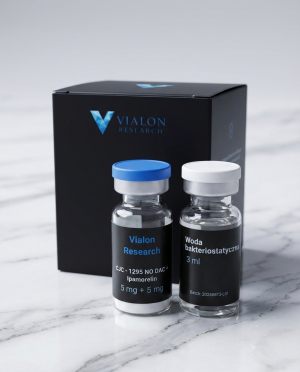
Zestaw GHRH + GHSR · analog + agonista
Nota: Niniejszy artykuł ma charakter wyłącznie edukacyjny i jest oparty na recenzowanej literaturze naukowej. Opisane…
Uwaga: Poniższy artykuł ma charakter wyłącznie edukacyjny i informacyjny. Opisywane substancje są przeznaczone do celów…
Właściwe przechowywanie peptydów to fundament każdego powtarzalnego eksperymentu. Nawet najczystszy peptyd (≥98% HPLC) traci aktywność,…
Ipamorelin to syntetyczny pentapeptyd należący do grupy sekretagonów GH (GHS). Jest wysoce selektywnym agonistą receptora greliny GHS-R1a, opracowanym przez Novo Nordisk. Zawiera 5 aminokwasów, w tym dwa nieproteinogenne (Aib i D-2-Nal).
Ipamorelin wykazuje najwyższą selektywność wśród sekretagonów GH. W badaniach przedklinicznych nie wpływa na poziomy kortyzolu, prolaktyny ani aldosteronu — w odróżnieniu od GHRP-6 (zwiększa apetyt i kortyzol) i GHRP-2 (zwiększa prolaktynę). Selektywność opisali Raun et al. (1998).
Oferujemy Ipamorelin w gramaturze 5mg w formie liofilizowanego proszku. Produkt dostarczany jest w fiolce z liofilizatem peptydu. Dostępny jest również blend z CJC-1295 NO DAC.
Liofilizat przechowuj w temperaturze -20°C do -80°C. Po rekonstytucji w jałowej wodzie przechowuj w lodówce (2-8°C) i zużyć w ciągu 30 dni.
Kluczowa praca: Raun et al. (European Journal of Endocrinology, 1998) z Novo Nordisk, opisująca selektywność Ipamorelinu wobec GHS-R1a oraz brak wpływu na kortyzol i prolaktynę w modelach zwierzęcych. Peptyd jest przedmiotem badań nad osią somatotropową GH-IGF-1.