Variability of HPLC and MS Laboratory Analysis Results
TL;DR: Laboratory analysis results can differ even for the same test material, because methods such…

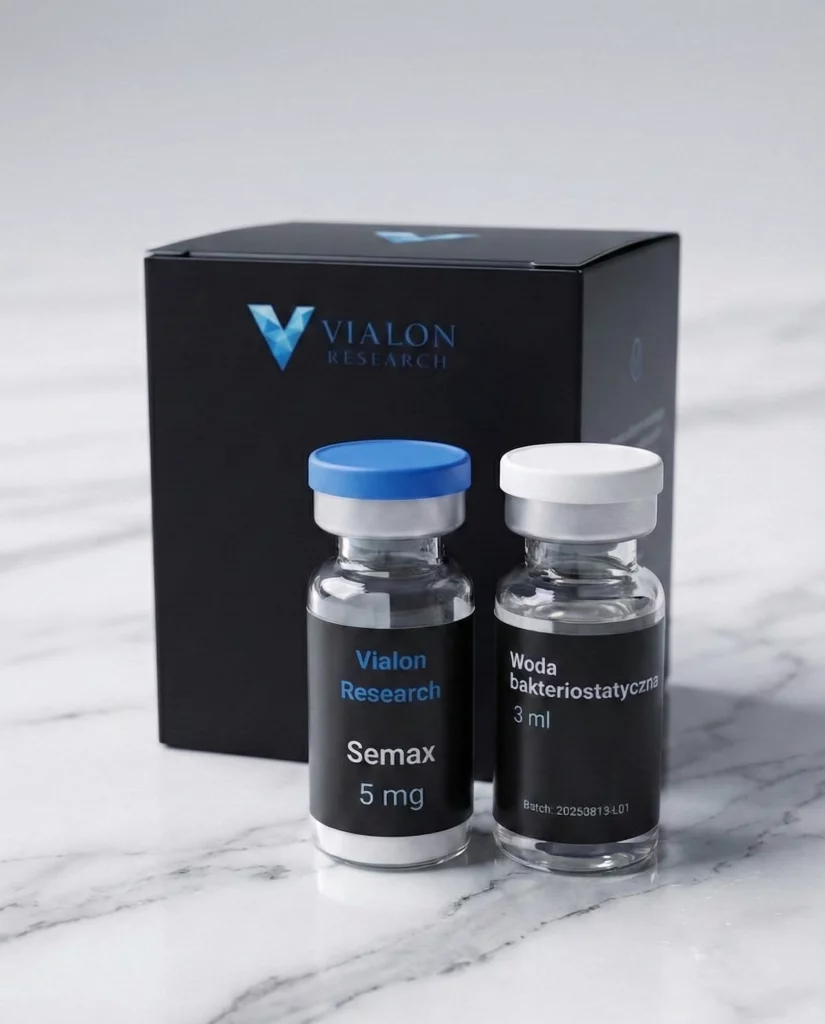
Heptapeptide · ACTH(4-7) fragment · CAS 80714-61-0
| Parameter | Value |
|---|---|
| Molecular formula | C₃₇H₅₁N₉O₁₀S |
| Molecular weight | ~813.9 Da |
| Amino acid count | 7 (heptapeptide) |
| CAS number | 80714-61-0 |
| PubChem CID | 9811102 |
| Physical form | White lyophilized powder |
| Purity | ≥98% (RP-HPLC) |
| Classification | Chemical reagent / research material |
| Intended use | For in vitro research use only, not for use in humans or animals |
Not classified as a hazardous substance under CLP regulation. Offered as a chemical reagent for in vitro laboratory use, within the framework of applicable European Union chemical substances regulations (REACH, CLP).
Reconstitution and storage conditions:
Typical analytical equipment:
All working parameters should be selected according to the research laboratory’s internal protocol. Product intended exclusively for in vitro and analytical use; not for human or animal use.
Semax is a synthetic heptapeptide with the sequence Met-Glu-His-Phe-Pro-Gly-Pro, developed at the Institute of Molecular Genetics of the Russian Academy of Sciences by the team led by I.P. Ashmarin and N.F. Myasoedov. The molecule is an analog of the ACTH(4-10) fragment, in which the natural C-terminal tripeptide was replaced with the PGP (Pro-Gly-Pro) sequence. The ACTH(4-7) fragment, Met-Glu-His-Phe, is responsible for the neurotropic properties described in animal model studies, while lacking the corticotropic activity that requires amino acid residues 1-3 present in full-length ACTH.
The PGP tripeptide serves as an enzymatic stabilizer. The presence of proline at both ends of the PGP sequence protects the molecule from aminopeptidase and carboxypeptidase degradation, which in in vitro studies translated to an extended half-life compared to the unmodified ACTH(4-10) fragment. Importantly, Semax does not activate the hypothalamic-pituitary-adrenal (HPA) axis and does not induce cortisol release, distinguishing it from full-length ACTH and its shorter analogs retaining N-terminal residues.
One of the most widely described effects of Semax in animal models is modulation of neurotrophic factor expression. In rat studies, peptide administration was shown to increase BDNF (brain-derived neurotrophic factor) levels in the hippocampus and cerebral cortex. Effects on NGF (nerve growth factor) levels were also observed. These effects are particularly significant from a research perspective, as BDNF and NGF play key roles in synaptic plasticity and neuronal survival in in vitro and in vivo models.
As an ACTH fragment analog, Semax interacts with melanocortin receptors, particularly MC3R and MC4R. These receptors, widely expressed in the rodent central nervous system, mediate many effects of proopiomelanocortin (POMC)-derived peptides. Unlike ACTH, Semax does not activate MC2R (the receptor responsible for adrenal steroidogenesis), explaining the lack of corticotropic activity.
Transcriptomic studies in the rat model demonstrated that Semax induces expression of immediate early genes such as c-fos and NGFI-A in hippocampal structures. Modulation of serotonergic and dopaminergic systems was also observed, including effects on monoamine turnover in selected rat brain regions.
Semax was developed in the 1980s-90s by the team of I.P. Ashmarin, V.N. Nezavibatko, and N.F. Myasoedov at the Institute of Molecular Genetics, Russian Academy of Sciences. The key publication describing characterization of the peptide as an ACTH(4-10) analog with PGP stabilizing tripeptide appeared in Russian neurobiological literature [1]. The authors demonstrated that C-terminal sequence modification of the ACTH fragment provides protease resistance while preserving neurotropic properties observed in the rat model, without cortisol release induction.
Dolotov O.V. et al. published a series of papers on Semax effects on neurotrophic factor expression in rat brain [2]. In animal model studies, significant increases in BDNF mRNA levels in the hippocampus and frontal cortex were demonstrated following peptide administration. The effect was dose-dependent and persisted for several hours after a single dose. Later work by this team also described modulation of NGF expression and TrkB receptors in selected rodent brain structures [3].
As an ACTH(4-7) fragment derivative, Semax interacts with the melanocortin receptor (MCR) family. Pharmacological studies demonstrated peptide affinity for MC3R and MC4R, with no activation of MC2R responsible for steroidogenesis [4]. MC4R receptors are widely expressed in the rat CNS, including the hippocampus, hypothalamus, and cerebral cortex.
In transcriptomic studies by Agapova T.Yu. et al., Semax was shown to induce immediate early gene expression (c-fos, NGFI-A) in rat hippocampus [5]. Microarray analysis revealed changes in expression of dozens of genes related to synaptic plasticity, intracellular signaling, and neurotransmitter metabolism. Later RNA-seq work confirmed broad effects of the peptide on the neuronal transcriptome, including serotonergic and dopaminergic pathway genes in limbic brain structures.
Semax is a heptapeptide with a mass of ~814 Da, composed of two functional domains:
Selected publications on Semax (ACTH(4-10) analog) in preclinical research.
"Nootropic and analgesic effects of Semax following different routes of administration"
Neuroscience Research Communications, 16(3):163-170
"Semax, an analog of ACTH(4-10) with cognitive effects, regulates BDNF and trkB expression in the rat hippocampus"
Brain Research, 1117(1):54-60
This product is a chemical raw material intended exclusively for in vitro research, scientific, and analytical applications. It is not intended for human or veterinary use, including for diagnostic, therapeutic, prophylactic, or nutritional purposes.
This product is not classified as a hazardous substance under CLP Regulation (EC) No 1272/2008. It is offered as a chemical reagent within the framework of applicable European Union chemical substances regulations (REACH, CLP). It does not constitute a medicinal product, dietary supplement, medical device, or cosmetic within the meaning of applicable laws.
Unused material should be disposed of in accordance with local regulations on chemical waste. Under laboratory conditions: neutralize and dispose with laboratory waste streams. Do not discharge into sewage systems.
This product is offered in accordance with applicable European Union regulations on chemical substances (REACH, CLP) and Polish law governing the trade of chemical reagents and research materials. Full terms of sale and product classification are set out in the Terms of Service.
By placing an order, the Customer confirms having read the above information and accepts the provisions of the Terms.
For questions regarding handling or regulatory information: [email protected].
Verified customer reviews for this product
Dobrze zapakowane, szybka realizacja
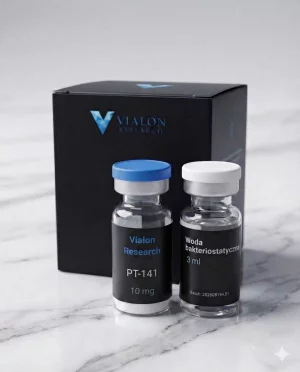
TL;DR: Laboratory analysis results can differ even for the same test material, because methods such…
TL;DRThis article explains how HPLC/MS is widely used as a set of laboratory analytical methods…
Reading a COA requires verifying the batch, analytical methods, acceptance criteria, and test results.
Semax is a synthetic heptapeptide with the sequence Met-Glu-His-Phe-Pro-Gly-Pro. It is an analog of the ACTH(4-10) fragment with a C-terminal PGP stabilizing sequence added to increase resistance to enzymatic degradation. CAS: 80714-61-0.
Both are Russian-developed heptapeptides with PGP stabilizers. Semax is derived from the ACTH(4-10) fragment and studied for nootropic properties. Selank is derived from tuftsin (an immunomodulatory tetrapeptide) and studied for anxiolytic properties. Both are available in our catalog.
Store lyophilized Semax at -20°C to -80°C. After reconstitution, store at 2-8°C and use within 30 days.
Semax is available as a 5 mg lyophilized vial.
Semax has been studied in the context of BDNF expression, NGF modulation, and cognitive function in animal models. It is one of the most-studied nootropic peptides, with extensive Russian-language literature.